
5 Row Cover Fabrics That Protect Your Crops in Frosty Weather
You’ll start by choosing one of five row covers to guard crops against frost, snow, and wind. AlpineReach or Frost & Sun blankets give 85% light blocking with durability; Floating Row Covers offer about 70% light transmission and easy pins or stones; Frost Protection Row Blanket adds heavy-duty protection; MAQIHAN provides a reusable option. Compare size, weight, and light transmission, then plan placement and securing method. Pick a fabric, set it up, and prepare for rapid adjustments as temps shift, then compare results.
| AlpineReach Frost & Sun Plant Covers 10×30 ft |

| Best Winter Coverage | Purpose: Frost & Sun protection | Size / Coverage: 10 x 30 ft | Material Type: 1.2 oz/yd² fabric (frost blanket) | VIEW LATEST PRICE | Read Our Analysis |
| Floating Row Cover Plant Blanket for Cold Weather |

| Durable Reusable Shield | Purpose: Winter frost protection | Size / Coverage: 10 x 33 ft | Material Type: Polypropylene fabric | VIEW LATEST PRICE | Read Our Analysis |
| Plant Covers: Frost Protection Row Blanket Fabric 10x40ft |

| Heavy-Duty Frost Blanket | Purpose: Frost protection | Size / Coverage: 10 x 40 ft | Material Type: Non-woven fabric (1.1 oz/yd²) | VIEW LATEST PRICE | Read Our Analysis |
| Floating Row Cover for Garden Plants (6.5 × 16.4 ft) |

| Lightweight Spring Protector | Purpose: Frost protection | Size / Coverage: 6.5 x 16.4 ft | Material Type: 1.2 oz non-woven fabric | VIEW LATEST PRICE | Read Our Analysis |
| MAQIHAN Plant Cover: 6.5 ft x 13 ft Frost Blanket |
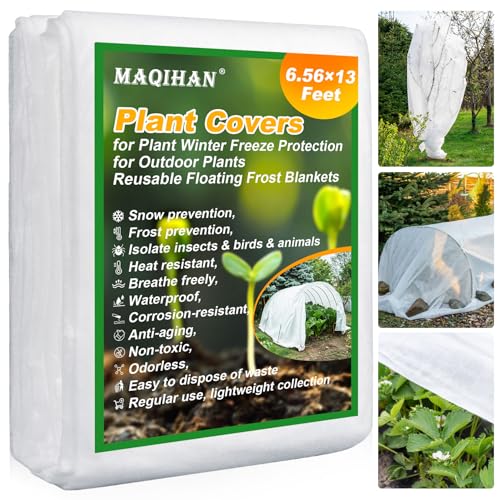
| Customizable Frost Guard | Purpose: Frost protection | Size / Coverage: 6.5 x 13 ft | Material Type: Non-woven fabric (1 oz/ft²) | VIEW LATEST PRICE | Read Our Analysis |
More Details on Our Top Picks
AlpineReach Frost & Sun Plant Covers 10×30 ft
AlpineReach Frost & Sun Plant Covers 10×30 ft are ideal for growers needing reliable winter protection. You start by recognizing the product’s purpose: a thick 1.2 oz/yd² freeze blanket for low temperatures, winter protection, and floating row gardening. Next, confirm it shields frost, freezing temps, snow, and harsh winds, extending your growing season. You’ll note its breathable design that lets light, air, and water through, preventing smothering. Then deploy the cover to create a warmer microclimate, reducing frost damage and accelerating germination. Finally, reuse it season after season; install, remove, and store as seasons change, keeping your crops protected.
- Purpose:Frost & Sun protection
- Size / Coverage:10 x 30 ft
- Material Type:1.2 oz/yd² fabric (frost blanket)
- Breathability / Light Transmission:Breathable (light, air, water pass through)
- Reusability:Reusable
- Installation / Setup:Easy to install/remove
- Additional Feature:Lightweight reusable material
- Additional Feature:UV sun protection
- Additional Feature:Winter floating row capability
Floating Row Cover Plant Blanket for Cold Weather
For cold-weather protection, the Floating Row Cover Plant Blanket is a strong choice when you need a durable reusable shield. It measures 10 ft by 33 ft, and you can cut it with scissors to fit row widths or use as-is for wide rows. It provides about 70% light transmission and acts as a heat-retaining barrier and windbreak. Use landscape pins or stones to secure it, and ensure rain or overhead irrigation reach soil. It protects strawberries, herbs, perennials, small fruits, and tender plants, extending seasons while shielding from frost and pests. Reuse it season after season.
- Purpose:Winter frost protection
- Size / Coverage:10 x 33 ft
- Material Type:Polypropylene fabric
- Breathability / Light Transmission:~70% light transmission
- Reusability:Reusable
- Installation / Setup:Easy to install; secure with pins/stones (sold separately)
- Additional Feature:Lifetime satisfaction guarantee
- Additional Feature:Cut-to-fit flexibility
- Additional Feature:Easy to secure with pins/stones
Plant Covers: Frost Protection Row Blanket Fabric 10x40ft
This plant cover delivers reliable frost protection thanks to its heavy-duty frost blanket design. You receive a 10 ft by 40 ft roll of thicker non-woven fabric, 1.1 oz/yd², that protects plants, crops, and shrubs from frost, snow, and cold winds. Drape the cover over beds or individual plants, then secure with soil, stones, or staples. It blocks up to 85% of UV light while remaining breathable for air and moisture. It’s reusable; clean after each season and store flat. It adapts by cutting to size for seedlings or mature plants, and it doubles as a dust cover if needed.
- Purpose:Frost protection
- Size / Coverage:10 x 40 ft
- Material Type:Non-woven fabric (1.1 oz/yd²)
- Breathability / Light Transmission:Breathable (air/moisture movement)
- Reusability:Reusable
- Installation / Setup:Simple setup; drape over plants and secure
- Additional Feature:1.1 oz thicker non-woven
- Additional Feature:UV protection up to 85%
- Additional Feature:Multi-season use notes
Floating Row Cover for Garden Plants (6.5 × 16.4 ft)
With a 6.5 × 16.4 ft footprint, this floating row cover serves as a lightweight spring protector for crops. You use it to shield seedlings and young plants from late frost and sudden temperature drops. The fabric is 1.2 oz, breathable, and non-woven, so it lets sunlight, air, and water through while retaining warmth. Lay it over plants or supported hoops, then secure edges. It can be folded, stored, and reused, making it versatile for early planting, raised beds, or vegetable rows. Use it as a frost blanket, light shade, or wind shield for unpredictable spring conditions. Brand is Sprthrd.
- Purpose:Frost protection
- Size / Coverage:6.5 x 16.4 ft
- Material Type:1.2 oz non-woven fabric
- Breathability / Light Transmission:Breathable (sun, air, water pass through)
- Reusability:Reusable
- Installation / Setup:Lay over plants or use with hoops
- Additional Feature:Lightweight 1.2 oz fabric
- Additional Feature:Hoop-ready or lay-flat use
- Additional Feature:Reusable and easy storage
MAQIHAN Plant Cover: 6.5 ft x 13 ft Frost Blanket
The MAQIHAN Plant Cover is ideal for gardeners needing reliable frost protection that’s easy to adapt. You get a 6.5 ft by 13 ft frost blanket made from non-woven, 1 oz/sq ft fabric. Use it as a reusable floating row cover for outdoors, providing frost and snow protection plus a sun shield. It offers triple-duty coverage: frost protection, snow protection, and an animal/insect barrier, with sun shielding as needed. Options include cutting to plant size, covering directly on plants, laying loosely over beds, or securing with hoops or frames. Deploy before sunset, remove after freezing temps lift, dry before reuse.
- Purpose:Frost protection
- Size / Coverage:6.5 x 13 ft
- Material Type:Non-woven fabric (1 oz/ft²)
- Breathability / Light Transmission:Customizable light exposure (sun/shield guidance)
- Reusability:Reusable
- Installation / Setup:Deploy or cover directly; customizable fit
- Additional Feature:Triple-duty coverage
- Additional Feature:Customizable sizing options
- Additional Feature:Wet cover dries before reuse
Factors to Consider When Choosing Row Cover Fabrics for Frost Protection
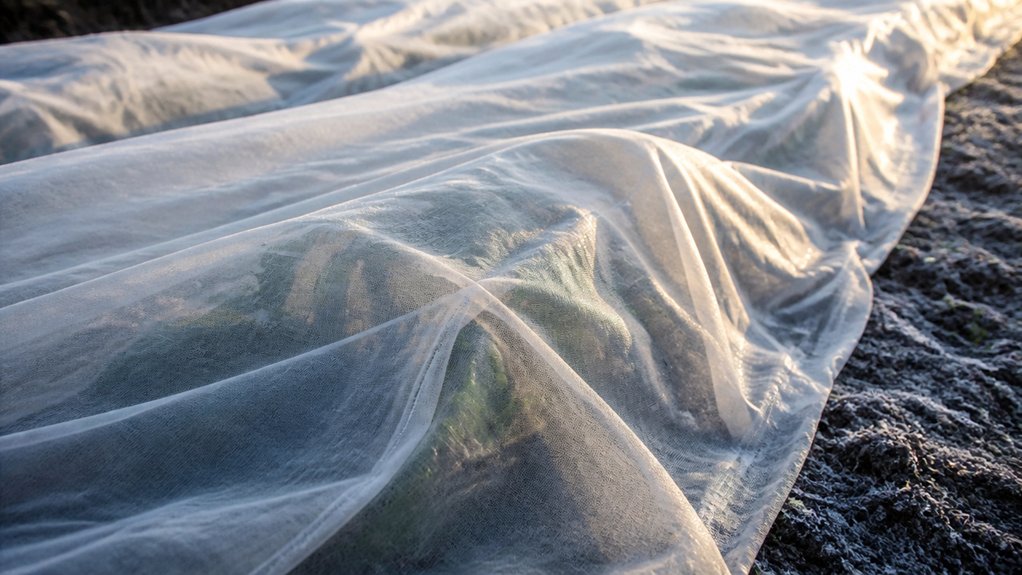
When choosing row cover fabrics for frost protection, start by evaluating fabric thickness to balance insulation with light transmission, and test a sample to confirm warmth without overly darkening plants. Next, assess light transmission levels and ensure you still provide enough sunlight for photosynthesis, selecting options with clear material percentages and performing a quick hop test on seedlings. Finally, review breathability, UV protection, durability, and reuse potential, comparing fabrics by care instructions, expected lifespan, and typical recovery after frost, so you can plan replacements or rotations as needed.
Fabric Thickness Considerations
If you want effective frost protection, start by evaluating fabric thickness. Choose a thickness around 1.2 oz/yd² for stronger insulation and a warmer microclimate, especially for tender transplants. Heavier fabrics reduce cold exposure, but you must balance this with light transmission; expect about 70% or less light passing through thicker blankets, which can slow photosynthesis during protection. Consider durability: thicker non-woven or fleece-like materials withstand multiple seasons and frequent handling, lowering replacement costs over time. Wind resistance improves with thickness, helping protect stressed seedlings. Ensure breathability remains, so air and moisture exchange isn’t blocked and fungal issues are minimized. If moisture buildup is a concern, test a sample to verify both warmth and airflow before full-scale use.
Light Transmission Levels
Light transmission levels determine how much sunlight reaches your plants while still offering frost protection. Choose a row cover in the 70%–85% range to balance light and warmth. For higher light needs, select lighter fabrics around 0.8 oz/yd² to maximize photosynthesis without sacrificing protection. If your crops are shade-tolerant or you want more shading, consider fabrics near 70% transmission, which still provide insulation. Some covers specify exact percentages, such as 70% light transmission, helping you estimate how growth will respond. Remember that heavier fabrics (1.1–1.2 oz/yd²) reduce light, increasing warmth but lowering light availability. Understand that gaps, folds, or uneven canopies can alter effective transmission; factor in installation and coverage when planning.
Breathability Balance
Consider how breathability affects frost protection and plant health. You evaluate fabrics by air and moisture permeability, which allows heat to dissipate and moisture to escape. Choose breathable row covers so essential exchange happens without losing frost insulation. Look for higher light transmission, around 70% or more, to support photosynthesis while keeping warmth, reducing stress on young transplants. Ensure the fabric enables water vapor to escape to minimize condensation and mold under frost protection. Balance is key: too much breathability can drop warmth on freezing nights, so pair breathable materials with adequate insulation. Reusable fabrics should maintain micro-perforations after multiple uses; verify durability without sacrificing air and moisture movement. Prioritize practical options, test in your conditions, and compare multiple brands.
UV Protection Capacity
UV protection capacity matters, but it should support frost protection rather than replace it. When choosing row covers, assess UV block percentage. Higher percentages, like 85%, reduce sun exposure while keeping air and moisture flow, but don’t overlook light needs for photosynthesis. Look for denser or thicker non-woven fabrics for better UV resistance, then verify they still transmit enough light for your crops. Check UV stabilization additives in polypropylene or similar fibers to ensure performance lasts through repeated uses. Pair UV features with frost considerations: ensure the fabric shields against sun damage during peak hours without hindering insulation at night. Balance UV blocking with translucence to support photosynthesis and frost protection simultaneously. Document fabric specifications and test under conditions you expect.
Durability and Reuse
Durability and reuse should guide your fabric choice to maximize frost protection over time. Choose heavier fabric weight, around 1.1–1.2 oz/yd², for greater durability and reuse across seasons. Prefer non-woven polypropylene or similar synthetic blends, known for strength and easy cleaning after use. Ensure the fabric resists tearing; this helps it hold up when folding and storing, reducing how often you replace it. Look for covers designed to withstand snow, wind, and UV exposure, extending life through varied weather. Proper storage matters: cool, dry, and out of direct sunlight between uses preserves strength. Clean and dry the fabric before storage, fold neatly, and label for future cycles to maintain integrity. These steps improve long-term performance and cost efficiency.
Weather Compatibility
When choosing row cover fabrics for frost protection, start by matching fabric weight to your frost needs. Heavier weights (1.0–1.2 oz/yd²) shield plants to near-freezing temps, while thicker non-woven blends offer stronger cold resistance for extended periods. Check light transmission, which ranges from about 70% to 85%; higher transmission lets more sunlight and warmth reach plants during frosts, while lower gives more insulation. Ensure breathability; fabrics that move air and moisture reduce rot risk under protection. Consider UV stability for daytime sun exposure; UV-treated covers guard against sunscorch while still insulating. Review durability and seasonal performance; select fabrics designed to withstand repeated freezes, wind, and snow for reuse. Match choice to your local climate and crop needs.
Easy Installation Tips
Choosing row cover fabrics for frost protection starts with practicality: pick options that are lightweight yet durable enough to drape easily and remove quickly. Choose 1.0–1.2 oz/yd² non-woven or polypropylene for easy draping and fast removal. Look for breathable materials that let light, air, and moisture reach the soil to prevent plant stress. Use flexible blankets that you can cut to size and secure with soil, stones, or hoops for a secure fit. Favor fabrics that are reusable and weather-resistant to withstand multiple seasons and repeat fold-and-store cycles. Ensure the fabric provides frost protection down to the expected minimum temperatures and can double as a windbreak during cold snaps. Follow manufacturer instructions for installation, then test fit and adjust for coverage.
Fit and Size Variability
Row covers come in different sizes and shapes, so start by matching the fabric to your bed width and row spacing. First, assess how many plants you plan to protect per setup, noting that covers come in varied sizes like 10×30 ft, 10×33 ft, or 6.5×16.4 ft. Choose a size that minimizes overlaps and gaps, reducing exposure to frost. Next, consider light transmission, such as about 70% for some 10×33 ft options, and how that affects photosynthesis and warmth. Check fabric weights, typically 1.0 to 1.2 oz/yd², to balance insulation with handling. Decide between cut-to-fit, reusable designs and pre-cut options, and balance breathability with frost protection to allow air and moisture to reach roots. Ensure proper fastening for your row spacing.
Final Thoughts
To protect crops, choose a fabric based on your frost risk and season length. Start by sizing: pick a blanket like 10×30 ft AlpineReach for small plots, or 10×40 ft for heavier protection. Consider light transmission: 70% for floating covers, up to 85% block with denser blankets. Check durability and reuseability, plus easy handling with pins or weights. Compare costs, then deploy over crops, secure edges, monitor airflow, and remove during warm days to avoid overheating.
Related Posts


About The Author

LED Guru
An experienced veteran when it comes to growing indoors, hydroponics, and organics. LED Guru shares a massive amount of knowledge about LED growing and how to do it best.