
5 Best Erosion Control Blankets That Actually Protect Your Soil
You’re facing soil erosion on slopes, around trees, or in garden beds, and you need a solution that truly works. Erosion control blankets stop water runoff and hold soil in place while vegetation establishes. You’ll find options ranging from natural jute fibers to biodegradable synthetic materials, each with specific advantages for different project sizes and timelines. Understanding which blanket suits your situation requires knowing what these five top products do.
| Jute Erosion Control Mesh Blanket 48″ x 20 Yards |
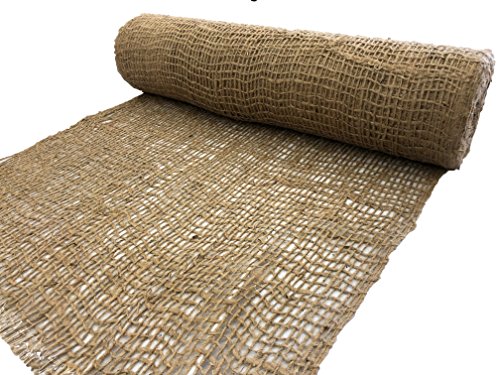
| Eco-Friendly Classic | Primary Material: Natural jute fabric | Biodegradability: Fully biodegradable; enriches soil as it degrades | Coverage Area: Approximately 240 square feet | VIEW LATEST PRICE | Read Our Analysis |
| Farm Plastic Biodegradable Erosion Control Blanket (8′ x 112.5′) |

| Contractor’s Choice | Primary Material: 70% wheat straw, 30% coconut fiber | Biodegradability: 100% biodegradable components; net degrades in ~90 days | Coverage Area: 900 square feet (8′ x 112.5′) | VIEW LATEST PRICE | Read Our Analysis |
| Farm Plastic Supply QuickGrass Pro Erosion Control Blanket |
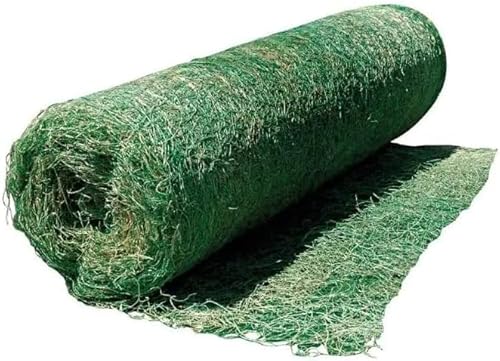
| Premium Performance | Primary Material: Excelsior fibers (wet curled) with aspen wood fibers | Biodegradability: 100% biodegradable with photo-degradable or biodegradable netting | Coverage Area: 900 square feet (8′ x 112.5′) | VIEW LATEST PRICE | Read Our Analysis |
| Dewitt Excelsior Soil Erosion Control Blanket Roll |
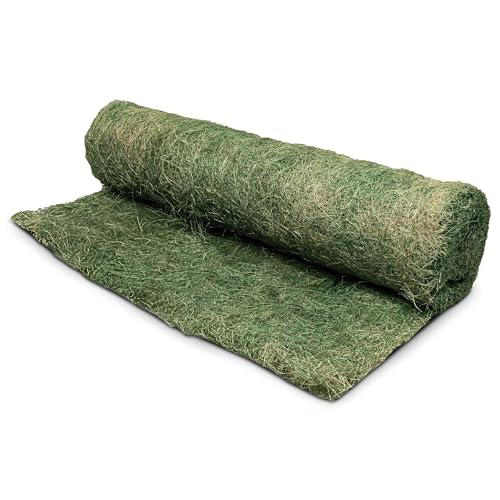
| Professional Grade | Primary Material: Aspen wood fiber (natural curled excelsior) | Biodegradability: Photodegradable top net; aspen fibers naturally degrade | Coverage Area: 450 square feet (4′ x 112.5′) | VIEW LATEST PRICE | Read Our Analysis |
| Jute Erosion Control Blanket 5 Yard Coverage |
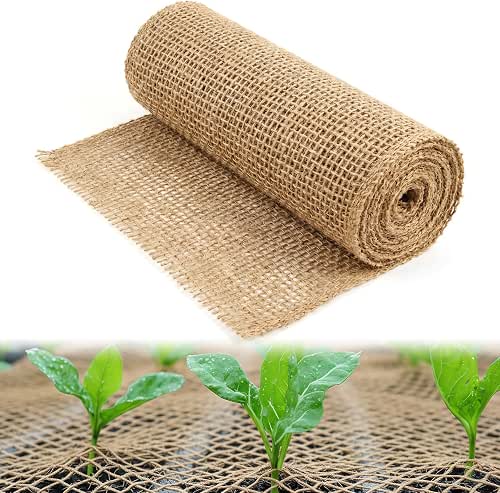
| Budget-Conscious Pick | Primary Material: Natural jute fabric | Biodegradability: Fully biodegradable natural material | Coverage Area: Approximately 50 square feet | VIEW LATEST PRICE | Read Our Analysis |
More Details on Our Top Picks
Jute Erosion Control Mesh Blanket 48″ x 20 Yards
If you’re protecting slopes and garden beds, this eco-friendly classic jute blanket delivers reliable soil protection. The 48-inch by 20-yard mesh covers approximately 240 square feet and resists UV degradation while maintaining strength over time. You’ll appreciate its natural, biodegradable construction that enriches soil as it breaks down without leaving harmful residues. Installation is straightforward: the lightweight, pliable material cuts easily to fit embankments and various terrain shapes. Simply lay it across vulnerable areas, secure the edges, and let it prevent wind and water erosion while supporting plant growth. This blanket works well for both landscaping professionals and gardening enthusiasts managing soil stability.
- Primary Material:Natural jute fabric
- Biodegradability:Fully biodegradable; enriches soil as it degrades
- Coverage Area:Approximately 240 square feet
- Installation & Adaptability:Easily cut and tailored; manageable weight; pliable
- Intended Applications:Embankments, slopes, garden beds, landscaping
- Netting Type:No top netting mentioned
- Additional Feature:Enriches soil during degradation
- Additional Feature:UV degradation resistant construction
- Additional Feature:Easily cut and tailored
Farm Plastic Biodegradable Erosion Control Blanket (8′ x 112.5′)
For contractors managing temporary erosion control on construction sites, the Farm Plastic Biodegradable Erosion Control Blanket stands out as the contractor’s choice. This blanket combines 70% wheat straw and 30% coconut fiber, bound with biodegradable brown poly netting that breaks down within approximately 90 days. The 8′ x 112.5′ size covers substantial areas efficiently. You’ll deploy it on hillsides, riverbeds, culvert inlets, and ditch linings to shield seeds from erosion and harsh weather while promoting germination. Since all components—straw, coconut fibers, and netting—biodegrade completely, you won’t need removal after project completion. This makes it ideal for temporary applications where leaving materials behind isn’t problematic.
- Primary Material:70% wheat straw, 30% coconut fiber
- Biodegradability:100% biodegradable components; net degrades in ~90 days
- Coverage Area:900 square feet (8′ x 112.5′)
- Installation & Adaptability:Contractor-friendly; versatile for multiple terrain types
- Intended Applications:Riverbeds, hills, culverts, ditches, construction projects
- Netting Type:Biodegradable brown poly net
- Additional Feature:Net biodegrades in ~90 days
- Additional Feature:Aids seed germination support
- Additional Feature:70% wheat straw composition
Farm Plastic Supply QuickGrass Pro Erosion Control Blanket
The QuickGrass Pro delivers premium performance for projects where you need reliable soil protection across large areas. This 8′ x 112.5′ blanket uses 100% biodegradable excelsior fibers that interlock to create a stable matrix cling to soil through barbed fibers. The built-in swell factor enhances stability while aspen wood fibers provide nutrients during breakdown. You’ll find the blanket works across landscaping, road construction, residential, and commercial developments. Its seed-free composition contains no chemical additives, making it suitable for sensitive environments. The product weighs 50 pounds and measures 84 x 10 x 10 inches when shipped. With a 4.0-star rating from 103 reviews, it demonstrates proven effectiveness for erosion prevention.
- Primary Material:Excelsior fibers (wet curled) with aspen wood fibers
- Biodegradability:100% biodegradable with photo-degradable or biodegradable netting
- Coverage Area:900 square feet (8′ x 112.5′)
- Installation & Adaptability:Barbed fibers cling to soil; built-in swell for stability
- Intended Applications:Landscaping, road construction, residential, commercial, industrial developments
- Netting Type:Photo-degradable or biodegradable netting (top covered)
- Additional Feature:Built-in swell factor stability
- Additional Feature:Green dyed instant color
- Additional Feature:Wet curled fiber matrix
Dewitt Excelsior Soil Erosion Control Blanket Roll
Dewitt’s professional-grade excelsior blanket roll delivers soil stabilization across large project areas with its 4 by 112.5 foot coverage. The blanket uses natural curled aspen wood fibers evenly distributed to retain soil and reduce surface movement after excavation or landscaping work. A photodegradable top net holds fibers during installation, then breaks down as vegetation establishes. The green-dyed surface blends into outdoor environments during early project stages. You’ll apply this blanket to slopes, embankments, ditch bottoms, stream banks, drainage channels, and roadway edges. It provides temporary coverage while seeds germinate and plants develop root systems.
- Primary Material:Aspen wood fiber (natural curled excelsior)
- Biodegradability:Photodegradable top net; aspen fibers naturally degrade
- Coverage Area:450 square feet (4′ x 112.5′)
- Installation & Adaptability:Single net construction; suitable for slopes and embankments
- Intended Applications:Slopes, stream banks, drainage channels, roadside areas
- Netting Type:Photodegradable top net (single net construction)
- Additional Feature:Photodegradable top net construction
- Additional Feature:Green dyed blended appearance
- Additional Feature:Aspen wood fiber composition
Jute Erosion Control Blanket 5 Yard Coverage
Looking to stabilize slopes without breaking your budget? The Jute Erosion Control Blanket offers a natural, cost-effective solution. This 40-inch-wide, 15-foot-long blanket covers approximately 50 square feet and uses durable jute material to prevent erosion while retaining moisture. You can cut it to fit your specific terrain, making installation straightforward on embankments, flower beds, and slopes. The blanket protects seeds and soil integrity during establishment. You’ll also wrap it around trees to reduce frost risk and retain warmth. With quick setup and minimal labor requirements, you get reliable soil protection that lasts season after season.
- Primary Material:Natural jute fabric
- Biodegradability:Fully biodegradable natural material
- Coverage Area:Approximately 50 square feet
- Installation & Adaptability:Easy-to-cut design; quick setup; flexible customization
- Intended Applications:Slope stabilization, embankments, flower beds, tree wrapping
- Netting Type:No top netting mentioned
- Additional Feature:Wraps trees for warmth
- Additional Feature:Reduces frost risk protection
- Additional Feature:Promotes moisture retention capability
Factors to Consider When Choosing Erosion Control Blankets
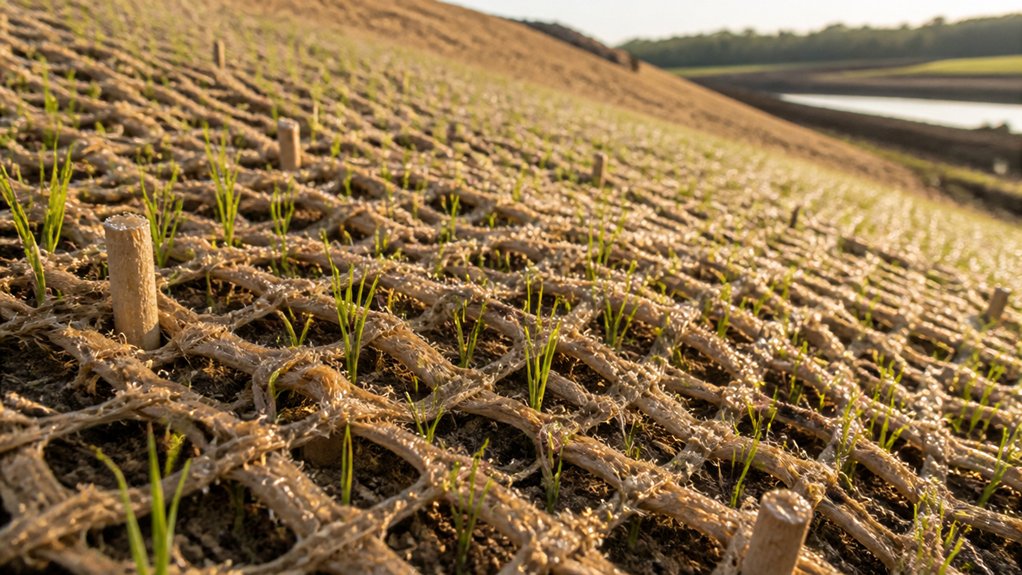
You’ll need to evaluate several key factors before selecting an erosion control blanket that fits your project’s requirements. Consider the material composition and durability to ensure it withstands your climate conditions, check the coverage area and dimensions to match your slope size, and assess the biodegradability and environmental impact to align with your sustainability goals. Each of these elements directly affects how well the blanket performs and how long it’ll protect your soil from washing away.
Best Erosion Control Blankets
What material composition will best suit your erosion control needs? Consider biodegradable blankets made from jute or straw and coconut mixtures. These materials break down naturally, leaving no persistent residue in your soil. Next, examine the blanket’s fiber matrix. You’ll want intertwined fibers with built-in swell factors that improve soil contact and stability against wind and water erosion. For coverage efficiency, select larger roll sizes like 4 x 112.5 feet or 8′ x 112.5′, which reduce installation frequency on slopes and embankments. Finally, verify that netting and binding materials are biodegradable or photodegradable. Choose blankets designed to support seed germination and protect soil nutrients during breakdown, promoting vegetation establishment and long-term stabilization.
Factors to Consider When Choosing Erosion Control Blankets
How do you select the right erosion control blanket for your specific project? First, identify your project duration and choose materials accordingly. Jute and cocontte blends degrade over time, suiting temporary applications. Next, measure your coverage area—blankets range from 240 ft² to 1,000+ ft²—and calculate how many you’ll need. Then evaluate binding types: biodegradable options dissolve naturally, while photodegradable versions break down under sunlight. Assess erosion protection capabilities by confirming the blanket retains soil, resists wind and water damage, and supports seed germination if needed. Finally, consider installation practicality. Verify the blanket cuts easily, conforms to slopes, and fits your timeline and labor capacity. Match all factors to your project requirements for optimal soil protection.
Material Composition And Durability
Since the blanket’s performance depends on what it’s made from, understanding fiber types and their durability is essential to your selection process. Natural fibers like jute, straw, and coconut coir form the matrix foundation. These materials degrade over time—typically within one to two years—allowing vegetation to establish before the blanket breaks down. Check the binding materials; biodegradable netting holds fibers together during installation. For extended protection, select blankets treated for UV and weather resistance. Examine the fiber density and interlocking structure, which determines how well the blanket contacts soil and resists wind and water movement. Match your fiber choice to your project timeline: quick-degrading options suit short-term stabilization, while treated fibers work for longer-term protection needs.
Coverage Area And Dimensions
Calculating the coverage area of an erosion control blanket requires multiplying its width by its length, then comparing that total to your project’s square footage. Standard widths range from 40 to 48 inches, while rolls extend from 20 yards to 112.5 feet. A 48-inch by 20-yard blanket covers approximately 240 square feet, whereas an 8-foot by 112.5-foot option covers roughly 1,000 square feet.
Determine your terrain’s dimensions first. Measure your slope or embankment length and width in feet. Divide your total square footage by the blanket’s coverage area to find how many units you’ll need. Consider whether your terrain requires straight cuts or multiple overlapping pieces for complete protection, as irregular shapes may demand extra material.
Biodegradability And Environmental Impact
When selecting an erosion control blanket, you’ll want to contemplate whether it’s biodegradable, since this feature directly affects both your long-term maintenance needs and environmental footprint. Biodegradable blankets use natural fibers like straw, coconut, jute, or wood excelsior that break down naturally over time, enriching your soil without leaving persistent residues. Degradation timelines range from weeks to several months, depending on soil moisture, temperature, and microbial activity. Non-biodegradable alternatives require manual removal after plant establishment, creating additional labor and waste. Choose biodegradable options for temporary erosion control during germination and growth phases. This approach eliminates removal costs, reduces environmental impact, and supports soil health as the blanket decomposes naturally into your landscape.
Installation Ease And Flexibility
How easily can you cut and position your chosen blanket across slopes and irregular terrain? Choose blankets designed for flexible installation that you can tailor to fit embankments and garden beds without difficulty. Select products with manageable weight and pliability, which simplify handling and reduce labor during setup. Look for single-layer options with lightweight netting that holds fibers in place while remaining easy to position. Prioritize blankets featuring green coloring or photodegradable netting for better visibility during installation on varied terrains. Verify the blanket maintains shape and adhesion during initial grading and reseeding phases, preventing movement before vegetation establishes. Test cutting the material along edges to confirm it responds well to standard tools, ensuring quick adjustments fit your specific landscape requirements.
Long-Term Soil Protection Benefits
Durability forms the foundation of effective erosion control blanket selection, and you’ll want to prioritize products engineered to withstand prolonged weather exposure while your seeds germinate and vegetation establishes. Examine the fiber composition—wood excelsior and jute offer superior soil adhesion and erosion resistance. Check that the matrix remains stable under UV light degradation, which commonly reduces blanket effectiveness over time. Verify the blanket includes moisture-retention properties that sustain soil hydration and seed viability during the critical establishment phase. Consider installation quality and slope conditions, as these factors directly impact how long protection lasts. Select blankets with biodegradable components designed to break down after vegetation matures, returning your soil to natural conditions while maintaining temporary protection when you need it most.
Final Thoughts
You’ve reviewed five effective erosion control blankets suited to different projects. Select based on your needs: choose jute for natural biodegradability, Farm Plastic for quick temporary coverage, QuickGrass Pro for seed-free stability, or Dewitt Excelsior for large-scale work. Consider your slope size, climate, budget, and how long you need protection. Install your chosen blanket promptly after soil preparation to prevent erosion and promote vegetation growth.
Related Posts


About The Author

LED Guru
An experienced veteran when it comes to growing indoors, hydroponics, and organics. LED Guru shares a massive amount of knowledge about LED growing and how to do it best.