
5 Best Bean Trellis Netting for Maximum Garden Yields
When you’re growing beans vertically, you need the right trellis netting to support heavy crops and simplify harvesting. You’ll find several options that differ in size, mesh opening, and durability—each suited to different garden setups. Choosing the wrong netting wastes space and frustrates your growing season. The five options below balance strength, coverage, and practicality. Here’s how to match each one to your needs.
| Tcamp Heavy-Duty Garden Trellis Net Plant Support (5Ft x 30Ft) |

| Best Overall | Mesh Size: 3.5-inch square mesh | Dimensions: 5 ft x 30 ft | Material Composition: Heavy-duty nylon netting | VIEW LATEST PRICE | Read Our Analysis |
| AlpineReach Trellis Netting 5 x 350 ft Heavy Duty |

| Professional Grade | Mesh Size: 6-inch mesh | Dimensions: 5 ft x 350 ft | Material Composition: Polyester | VIEW LATEST PRICE | Read Our Analysis |
| Tcamp Heavy-Duty Garden Trellis Netting (5Ft x 15Ft) |

| Best Value | Mesh Size: 3.5-inch square mesh | Dimensions: 5 ft x 15 ft | Material Composition: Heavy-duty nylon/polyester mesh | VIEW LATEST PRICE | Read Our Analysis |
| Garden Plant Trellis Netting 5×15 ft (2-Pack) |

| Best for Beginners | Mesh Size: 6×6-inch square mesh | Dimensions: 5 ft x 15 ft | Material Composition: Polyester nylon | VIEW LATEST PRICE | Read Our Analysis |
| Pack of 2 Cucumber Tomato Trellis Netting Garden Support |

| Compact Pick | Mesh Size: 4-inch (10cm x 10cm) mesh | Dimensions: 3 ft x 6 ft | Material Composition: Nylon | VIEW LATEST PRICE | Read Our Analysis |
More Details on Our Top Picks
Tcamp Heavy-Duty Garden Trellis Net Plant Support (5Ft x 30Ft)
If you’re growing climbing beans and need a reliable support system, the Tcamp Heavy-Duty Garden Trellis Net stands out for its durable construction and versatile sizing. The netting measures 5 feet by 30 feet with 3.5-inch square mesh openings, allowing you to cut it to your specific garden dimensions. Made from heavy-duty nylon, it withstands substantial crop loads without tearing or degrading. Install it vertically along bean rows or horizontally across garden beds. The soft edges won’t damage plants or harm children and animals. Simply hang it over structures, stretch it across supports, or attach it to walls. Since it arrives vacuum-sealed, you can store it easily and deploy it whenever needed for your climbing bean varieties.
- Mesh Size:3.5-inch square mesh
- Dimensions:5 ft x 30 ft
- Material Composition:Heavy-duty nylon netting
- Quantity Per Package:Single net
- Installation Flexibility:Vertical and horizontal configurations
- Suitable Climbing Plants:Vines, vegetables, fruits, flowers
- Additional Feature:Vacuum-sealed convenient packaging
- Additional Feature:Safe soft edges design
- Additional Feature:Adaptable by cutting option
AlpineReach Trellis Netting 5 x 350 ft Heavy Duty
Need a professional-grade netting solution that handles beans, peas, and cucumbers without breaking down? AlpineReach’s 5 x 350 ft netting delivers that durability. The 6-inch mesh spacing supports climbing plants effectively while allowing sunlight penetration. You’ll install it using A-frame or vertical configurations depending on your garden layout. The polyester construction resists sun damage and maintains integrity through multiple growing seasons. At 1.81 kilograms, it’s manageable for solo setup. This netting accommodates tomatoes, herbs, and berries alongside beans. The soft yet durable material won’t damage plant stems during growth. With 689 reviews averaging 4.6 stars, users consistently report reliable performance and straightforward installation for both indoor and outdoor applications.
- Mesh Size:6-inch mesh
- Dimensions:5 ft x 350 ft
- Material Composition:Polyester
- Quantity Per Package:Single net
- Installation Flexibility:A-frame, SCROG, horizontal, vertical, and upward gardening
- Suitable Climbing Plants:Tomatoes, beans, peas, cucumbers, zucchinis, eggplants, blueberries, herbs, berries
- Additional Feature:Semicircular shape construction
- Additional Feature:6-inch mesh promotes yield
- Additional Feature:Sun-resistant durable polyester
Tcamp Heavy-Duty Garden Trellis Netting (5Ft x 15Ft)
The Tcamp Heavy-Duty Garden Trellis Netting delivers outstanding value for gardeners who need to support heavy crop loads across large growing areas. This 5 ft x 15 ft netting features 3.5-inch square mesh openings, providing adequate spacing for climbing beans and vines. The nylon-polyester construction offers exceptional durability while remaining soft-edged and safe for wildlife. You can install it vertically against walls, horizontally over garden beds, or hang it from trees and structures. Cut the netting to your specific plot size without worry—it adapts easily. At 73.5 square feet per unit, one panel covers moderate garden sections. The vacuum-sealed packaging ensures compact storage and convenient transport to your garden site.
- Mesh Size:3.5-inch square mesh
- Dimensions:5 ft x 15 ft
- Material Composition:Heavy-duty nylon/polyester mesh
- Quantity Per Package:Single net
- Installation Flexibility:Vertical and horizontal garden layouts
- Suitable Climbing Plants:Vines, vegetables, fruits, flowers
- Additional Feature:No chemical residues present
- Additional Feature:Grow tent compatible style
- Additional Feature:Commercial-grade quality construction
Garden Plant Trellis Netting 5×15 ft (2-Pack)
Sukh’s 5×15 ft trellis netting (2-pack) works well for gardeners starting their vertical growing journey. Each net features 6×6 inch mesh squares made from durable polyester nylon, supporting heavy bean loads without damage. You’ll install the netting by securing it to frames, posts, or ground stakes using your preferred mounting method. The versatile design allows horizontal or vertical installation depending on your bean variety’s growth pattern. Two identical nets give you coverage flexibility across multiple garden sections. This setup lifts beans off soil, improving airflow and simplifying harvest while reducing disease risk from ground contact.
- Mesh Size:6×6-inch square mesh
- Dimensions:5 ft x 15 ft
- Material Composition:Polyester nylon
- Quantity Per Package:2-pack
- Installation Flexibility:Horizontal or vertical installation
- Suitable Climbing Plants:Tomatoes, cucumbers, beans, eggplants, climbing plants
- Additional Feature:Two nets per package
- Additional Feature:Improves airflow circulation benefits
- Additional Feature:Heavy crop load support
Pack of 2 Cucumber Tomato Trellis Netting Garden Support
Looking to support climbing plants without complicated setups? The Pack of 2 Cucumber Tomato Trellis Netting from Zivisk delivers practical garden support. Each net measures 3 feet by 6 feet with 4-inch mesh spacing, giving you two versatile options for your growing space. The nylon construction withstands weather extremes, remaining flexible for easy installation on walls, shelves, or trees. Install the nets by securing them vertically or horizontally depending on your plant layout. The 10-by-10-centimeter mesh holds beans, peas, cucumbers, and tomatoes upright while preventing tangling and fruit drop. After each season, rinse and store the reusable nets for future gardening projects.
- Mesh Size:4-inch (10cm x 10cm) mesh
- Dimensions:3 ft x 6 ft
- Material Composition:Nylon
- Quantity Per Package:2-pack
- Installation Flexibility:Hangs on shelf, wall, or tree
- Suitable Climbing Plants:Cucumbers, tomatoes, grapes, beans, peas, clematis, vining plants
- Additional Feature:Waterproof weather-resistant nylon material
- Additional Feature:10cm mesh prevents tangling
- Additional Feature:Reusable and recyclable option
Factors to Consider When Choosing Bean Trellis Netting
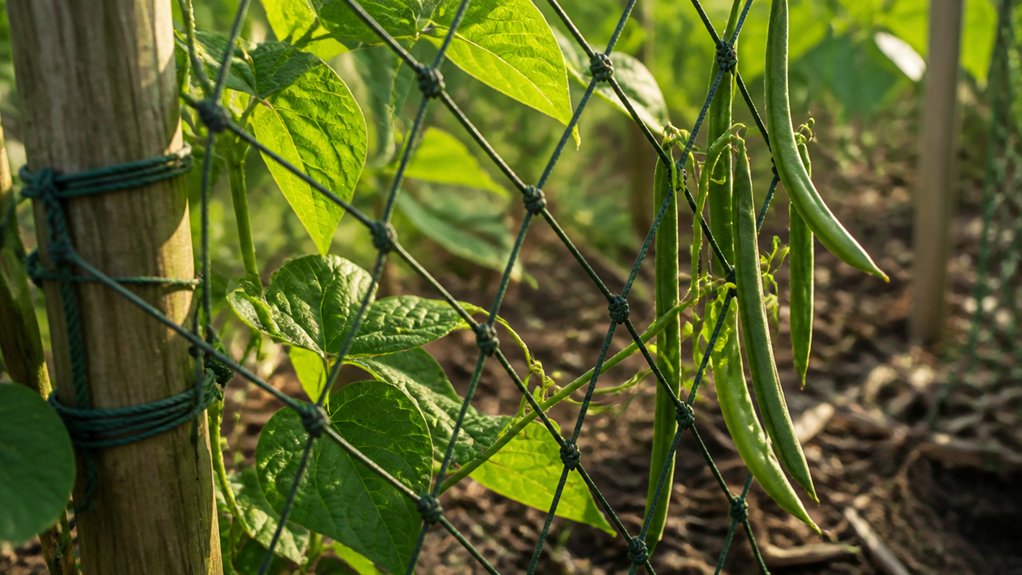
You’ll want to evaluate mesh size first, as smaller openings support lighter crops while larger openings work better for heavier bean varieties. Next, check the material’s durability by reviewing weight capacity ratings and UV resistance specifications, then assess installation requirements by measuring your garden space and confirming whether you need stakes, clips, or tie-downs. Finally, compare the netting’s dimensions against your growing area to ensure adequate coverage without gaps or excessive overlap.
Mesh Size Matters
When does mesh size matter most in bean trellis netting? You’ll choose your mesh size based on your bean variety’s vine thickness and growth characteristics. A 3.5-inch square mesh provides uniform spacing that supports most climbing beans while preventing fruit from slipping through gaps. Use 4-inch mesh when you need a balance between airflow and adequate contact points for tendrils to anchor securely. Select 6-inch mesh only if you’re growing beans with thicker stems that need larger openings to weave through, though you’ll sacrifice some support density and lift for dense clusters. Match your mesh size to your specific bean variety to maximize vertical support and minimize fruit damage throughout the growing season.
Material Durability Standards
Because bean crops can grow heavy and dense over a full season, your trellis netting must be constructed from heavy-duty nylon or polyester with strong break strength to handle the weight without sagging or tearing. Check the product specifications for UV-resistant and sun-stable materials that’ll maintain their integrity throughout the growing season without degrading from sunlight exposure. Look for packaging that indicates vacuum-sealed or reinforced construction, which ensures durability and allows you to cut the netting to your garden’s exact dimensions. Verify the material has soft edges and no sharp points that could damage your climbing vines or injure your hands during installation and maintenance. These durability standards directly impact how long your investment lasts and how effectively it supports your bean plants.
Weight Capacity Requirements
While durability ensures your netting won’t tear or degrade, weight capacity determines whether it’ll truly support your bean plants without sagging or failing under load. Calculate your netting’s required capacity by multiplying your expected mature plant weight by the number of plants you’re growing. Heavy-duty netting typically handles several pounds per linear foot. Runner beans and green beans demand sturdier nets because they develop substantial pod weight during fruiting. Account for dynamic loading—the additional stress from wind gusts and heavy fruit production. Choose netting rated well above your projected peak load. Smaller mesh sizes offer denser support but reduce airflow. Material thickness and composition, whether nylon or polyester, directly affect weight tolerance and durability under environmental stress. Select capacity ratings that exceed your calculations by a safety margin.
Installation Ease Assessment
How straightforward is it to get your bean trellis netting up and ready? You’ll want lightweight nylon or polyester netting that remains flexible during setup. Look for nets that come vacuum-sealed for compact storage and easy transport to your garden. Choose netting with 3.5 to 6-inch square mesh, which allows you to thread vines without difficulty while preventing plants from slipping through. Select nets designed for simple attachment methods—either hung over existing structures or fastened to frames using basic fasteners. Verify that edges are soft with no sharp points to avoid snagging during deployment. These features combined reduce installation time significantly, letting you secure your trellis system quickly and move on to planting your beans.
Size and Coverage Options
Once you’ve confirmed your netting’s installation ease, you’ll need to match the right size and coverage to your garden layout. Standard sizes range from 3 ft x 6 ft for small beds to 5 ft x 30 ft for larger plots. Consider your available space and plant density when selecting dimensions. Mesh sizes vary from 3.5 inches to 6 inches, determining how many beans or vines thread through each opening. Smaller meshes support more plants per section. You can also purchase multi-packs to increase total coverage across multiple beds. If your garden has irregular shapes, you’ll cut the netting to fit custom dimensions. Choose vertical, horizontal, A-frame, or SCROG configurations based on your space and airflow needs to maximize yields.
Safety Features Evaluation
What makes bean trellis netting safe for your garden environment? You’ll want to inspect the netting for soft edges and rounded corners that won’t cut your hands, plants, or pets during installation. Check that the material contains no chemical residues or toxic coatings that could harm wildlife and family members exposed to it. Choose heavy-duty nylon or polyester mesh construction, which resists breaking under plant weight and eliminates hazards from sharp fragments. Verify the packaging arrives vacuum-sealed and undamaged to prevent jagged edges during handling. Confirm the netting works with both vertical and horizontal setups without requiring dangerous fasteners or wires. These safety considerations protect everyone in your garden while supporting your beans effectively.
Weather Resistance Capability
You’ll need to evaluate weather resistance by examining whether your netting is made from polyester or nylon, since these materials perform differently under outdoor conditions. Polyester offers superior sun resistance and resists stretching over time, while nylon provides high strength but may absorb moisture more readily. Next, check for explicit UV stability labels, which indicate the netting won’t become brittle or fade after prolonged sun exposure. In humid climates, prioritize water-resistant options to prevent mold and rot. Then inspect the mesh size and weave density—tighter weaves resist wind damage and debris intrusion better than loose weaves. Finally, consider how temperature fluctuations affect flexibility; treated fabrics maintain flexibility in cold or heat, reducing edge fraying and tears. These factors collectively determine how many growing seasons your netting will last.
Budget and Value Comparison
How can you make sure you’re getting the best value for your money when comparing bean trellis netting options? Calculate the price per square foot across different sizes—a 5 ft x 30 ft net versus a 5 ft x 15 ft pack—to identify the most economical choice. Check the material type: nylon lasts longer than polyester, reducing replacement frequency and long-term costs. Examine multi-pack options for better unit pricing and seasonal reusability. Review packaging details like vacuum-sealing, which minimizes setup time and waste. Consider weight and installation versatility, including frame compatibility and orientation flexibility, since durable installations remain effective longer. Compare these factors systematically to determine which netting delivers the greatest return on your gardening investment.
Final Thoughts
You’ll maximize your garden yields by selecting netting that matches your crop size and garden layout. Pick heavy-duty polyester options for UV protection and durability. Install your chosen net vertically, horizontally, or in an A-frame configuration based on your space. Secure edges firmly to prevent sagging. Vacuum-sealed packaging protects your investment during storage. Start with smaller nets for testing, then expand to larger systems once you’ve confirmed your setup works effectively.
Related Posts


About The Author

LED Guru
An experienced veteran when it comes to growing indoors, hydroponics, and organics. LED Guru shares a massive amount of knowledge about LED growing and how to do it best.