
10 Best Pond Algae Treatments That Actually Work All Summer Long
You’re facing green water or stubborn algae in your pond, and you need a solution that works. The key is choosing the right treatment for your specific problem. You can pick from chemical algaecides, bacterial treatments, or natural options—each with different strengths and application methods. The treatments you select will depend on your pond size, fish type, and how severe the algae bloom is. Here’s what you need to know to pick correctly.
| API POND ALGAEFIX Algae Control (32 fl oz) |
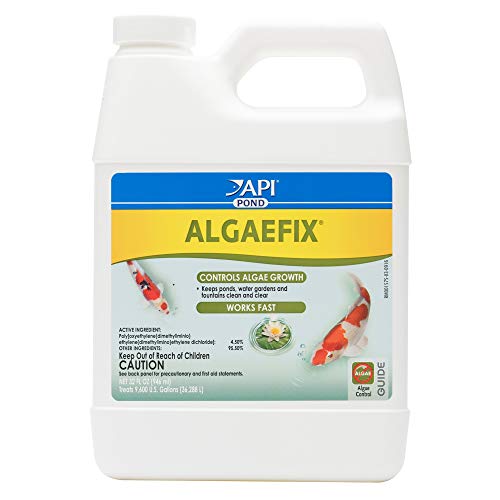
| Best Overall | Treatment Type: Liquid algaecide | Container Size: 32 fl oz | Fish Compatibility: Safe for fish | VIEW LATEST PRICE | Read Our Analysis |
| MICROBE-LIFT Algaway 5.4 Algae Control Treatment for Ponds |

| Fast-Acting Formula | Treatment Type: Liquid algaecide | Container Size: 8 fl oz | Fish Compatibility: Safe for fish (not crustaceans) | VIEW LATEST PRICE | Read Our Analysis |
| Crystal Plex Liquid Copper Algaecide Treatment (1 Gallon) |

| Best For Large Ponds | Treatment Type: Liquid copper algaecide | Container Size: 1 gallon | Fish Compatibility: Not safe for koi/goldfish/trout | VIEW LATEST PRICE | Read Our Analysis |
| Fountain Algaecide and Clarifier – 8oz Treatment |

| Best For Water Features | Treatment Type: Liquid algaecide/clarifier | Container Size: 8 fl oz | Fish Compatibility: Not safe for fish | VIEW LATEST PRICE | Read Our Analysis |
| Tetra Pond AlgaeControl Controls Green Water and Algae |

| Best For Established Ponds | Treatment Type: Liquid algaecide | Container Size: 16.9 fl oz | Fish Compatibility: Safe for fish | VIEW LATEST PRICE | Read Our Analysis |
| The Pond Guy InstaFix Algae Control Solution (16 oz) |

| Most Versatile | Treatment Type: Liquid algaecide | Container Size: 16 fl oz | Fish Compatibility: Safe for fish (not crustaceans) | VIEW LATEST PRICE | Read Our Analysis |
| Muck Clear Natural Pond Sludge Treatment 500 Tablets |

| Best For Maintenance | Treatment Type: Tablet bacteria/enzyme formula | Container Size: 500 tablets | Fish Compatibility: Safe for fish | VIEW LATEST PRICE | Read Our Analysis |
| Crystal Blue Copper Sulfate Algaecide Pond Control 5lb |

| Professional Grade | Treatment Type: Granular copper sulfate | Container Size: 5 lbs granules | Fish Compatibility: Not safe for koi/goldfish/trout | VIEW LATEST PRICE | Read Our Analysis |
| PondWorx Pond Bacteria for Large Ponds and Koi |

| Best For Koi Ponds | Treatment Type: Liquid bacteria concentrate | Container Size: 128 fl oz (1 gallon) | Fish Compatibility: Safe for fish (koi) | VIEW LATEST PRICE | Read Our Analysis |
| API Pond-Zyme Sludge Destroyer Pond Cleaner (1-Pound) |

| Best Sludge Control | Treatment Type: Powder bacteria/barley formula | Container Size: 1 lb powder | Fish Compatibility: Safe for fish (koi/goldfish) | VIEW LATEST PRICE | Read Our Analysis |
More Details on Our Top Picks
API POND ALGAEFIX Algae Control (32 fl oz)
Looking for a treatment that handles green water, string algae, and blanket weed in one solution? API POND ALGAEFIX offers an EPA-registered, copper-free formula that treats up to 9,600 gallons. Start by ensuring vigorous aeration in your pond or fountain, then mix the product thoroughly and disperse it evenly throughout the water. Re-dose every three days until you’ve controlled the algae. Once cleared, apply weekly doses to maintain clarity and reduce ongoing maintenance. The formula won’t disrupt beneficial bacteria or accumulate in sediment, making it safe for fish, plants, and surrounding wildlife when used as directed.
- Treatment Type:Liquid algaecide
- Container Size:32 fl oz
- Fish Compatibility:Safe for fish
- Algae Types Controlled:Green water, string algae, blanket weed
- Treatment Frequency:Every 3 days until controlled, then weekly maintenance
- Coverage/Treatment Capacity:Up to 9,600 gallons
- Additional Feature:Copper-free formula
- Additional Feature:Won’t accumulate in sediment
- Additional Feature:60+ years brand expertise
MICROBE-LIFT Algaway 5.4 Algae Control Treatment for Ponds
Need fast results against string algae and green water? MICROBE-LIFT Algaway 5.4 delivers. This EPA-registered algaecide controls both string algae and suspended algae blooms, clearing your water in as little as two days. The highly concentrated formula works safely with koi, goldfish, and aquatic plants. Apply the treatment according to the dosage chart, then run continuous aeration during treatment to prevent fish stress. Avoid using this product if your pond contains snails, shrimp, or other crustaceans. Combine Algaway 5.4 with other MICROBE-LIFT products like PL Pond Bacteria or Barley Straw Extract for comprehensive pond maintenance. One 8-ounce bottle treats multiple applications depending on your pond size.
- Treatment Type:Liquid algaecide
- Container Size:8 fl oz
- Fish Compatibility:Safe for fish (not crustaceans)
- Algae Types Controlled:String algae, suspended algae blooms
- Treatment Frequency:As directed per chart; aeration advised
- Coverage/Treatment Capacity:Treats per application chart
- Additional Feature:Results in 2 days
- Additional Feature:Not for crustaceans/mollusks
- Additional Feature:Part of product system
Crystal Plex Liquid Copper Algaecide Treatment (1 Gallon)
Crystal Plex Liquid Copper Algaecide Treatment addresses large pond algae problems effectively. This liquid copper formula kills filamentous algae, chara, and planktonic algae in ponds and lakes. One gallon treats up to one surface acre in depths of one to three feet. Apply the treatment to only one-third to one-half of your pond at a time to avoid overwhelming the water. The product remains safe for humans, fish, livestock, pets, and birds when used as directed. However, avoid using it in koi, goldfish, or trout ponds, as copper harms these species. You can safely use this algaecide near irrigation systems following label instructions.
- Treatment Type:Liquid copper algaecide
- Container Size:1 gallon
- Fish Compatibility:Not safe for koi/goldfish/trout
- Algae Types Controlled:Filamentous, chara, planktonic algae
- Treatment Frequency:Once (treats 1 acre surface)
- Coverage/Treatment Capacity:Up to 1 surface acre
- Additional Feature:Treats up to 1 acre
- Additional Feature:Not suitable for koi
- Additional Feature:Safe for irrigation use
Fountain Algaecide and Clarifier – 8oz Treatment
The Fountain Algaecide and Clarifier works specifically well for ornamental ponds and water features without fish. This 8-ounce liquid treatment covers up to 8,000 gallons and eliminates green water algae, string algae, and blanketweed. Apply 0.75 ounces per 1,000 gallons every three days until algae clears, then switch to weekly maintenance doses. The formula is non-hazardous, non-staining, and non-foaming when used correctly. Maintain your pond’s clarity by following the dosage schedule consistently. Never use this product in ponds containing fish, as it’s unsafe for aquatic life.
- Treatment Type:Liquid algaecide/clarifier
- Container Size:8 fl oz
- Fish Compatibility:Not safe for fish
- Algae Types Controlled:Green water, string algae, blanket weed
- Treatment Frequency:Every 3 days until controlled, then every 5 days maintenance
- Coverage/Treatment Capacity:Up to 8,000 gallons
- Additional Feature:DO NOT USE WITH FISH
- Additional Feature:Non-staining, non-foaming formula
- Additional Feature:Designed for small ponds
Tetra Pond AlgaeControl Controls Green Water and Algae
Tetra Pond AlgaeControl works well for ponds that’ve been established for at least three months, making it suitable for most permanent water features rather than newly created ones. You’ll apply 10 mL per 120 gallons of water, diluting the dosage in a bucket before dispersing it along pond edges in the morning. The treatment targets green water, string algae, and blanket weed. You can repeat applications every three days for up to three doses if needed. After treatment, remove dead algae using a fine mesh net or pond vacuum, then perform a partial water change. Use a dedicated measuring cup for the algaecide only, and avoid overdosing.
- Treatment Type:Liquid algaecide
- Container Size:16.9 fl oz
- Fish Compatibility:Safe for fish
- Algae Types Controlled:Green water, string algae, hair algae, blanket weed
- Treatment Frequency:Up to 3 doses every 3 days as needed
- Coverage/Treatment Capacity:10 mL per 120 gallons
- Additional Feature:Requires 3-month established pond
- Additional Feature:Dedicated measuring cup included
- Additional Feature:For synthetic-lined ponds
The Pond Guy InstaFix Algae Control Solution (16 oz)
If you’ve got fish and plants you want to protect while treating algae, InstaFix stands as the most versatile liquid algaecide option for small outdoor water features. Pour the 16-ounce solution evenly around your pond edge for fast results. It controls green water, string algae, blanketweed, and algae blooms while eliminating existing growth and preventing future outbreaks. Use it once to treat current algae or weekly for maintenance. The EPA-registered formula works best in well-aerated water from fountains or waterfalls. It’s safe for fish and plants when used as directed, though unsuitable for snails, shrimp, clams, and other crustaceans. This treatment suits ponds, water gardens, birdbaths, and decorative features.
- Treatment Type:Liquid algaecide
- Container Size:16 fl oz
- Fish Compatibility:Safe for fish (not crustaceans)
- Algae Types Controlled:Green water, string algae, blanket weed, algae blooms
- Treatment Frequency:As directed or weekly maintenance
- Coverage/Treatment Capacity:For small to medium ponds
- Additional Feature:EPA registered algaecide
- Additional Feature:Pour-and-apply simplicity
- Additional Feature:Safe for koi/goldfish
Muck Clear Natural Pond Sludge Treatment 500 Tablets
Muck Clear’s dual-action formula of beneficial bacteria and enzymes makes it ideal for maintaining pond clarity throughout the season. Drop one tablet every two weeks directly into your pond, fountain, or birdbath where it’ll sink to the bottom and release gradually. The tablets work best when water temperatures stay above 50°F. They break down organic sludge accumulation while eliminating odors and restoring water balance. Since the product contains no harsh chemicals, it’s completely safe for fish, pets, birds, and wildlife. You’ll notice improved water clarity and a healthier aquatic ecosystem over time with consistent application.
- Treatment Type:Tablet bacteria/enzyme formula
- Container Size:500 tablets
- Fish Compatibility:Safe for fish
- Algae Types Controlled:Organic sludge (bacteria/enzyme breakdown)
- Treatment Frequency:Every 2 weeks
- Coverage/Treatment Capacity:Ideal for ponds, fountains, birdbaths
- Additional Feature:100% natural/chemical-free
- Additional Feature:Dual-action bacteria+enzymes
- Additional Feature:Effective above 50°F
Crystal Blue Copper Sulfate Algaecide Pond Control 5lb
Crystal Blue’s professional-grade copper sulfate granules work best for larger pond systems where you’re battling actively growing algae across substantial surface areas. Broadcast the 5-pound granules directly over thick floating algae mats when water temperatures exceed 60°F. The 99% copper sulfate pentahydrate formula targets filamentous, string algae, and swimmers itch effectively. However, avoid this treatment if your pond contains koi, goldfish, trout, or grass carp—these species are sensitive to copper. Apply conservatively to prevent rapid oxygen depletion from decomposing vegetation. Monitor treatment scale carefully, treating only sections at a time rather than the entire pond simultaneously. This approach maintains water quality while controlling algae growth throughout summer.
- Treatment Type:Granular copper sulfate
- Container Size:5 lbs granules
- Fish Compatibility:Not safe for koi/goldfish/trout
- Algae Types Controlled:Filamentous, string algae, swimmers itch algae
- Treatment Frequency:Once when algae actively growing
- Coverage/Treatment Capacity:Large bodies of water (not small ponds)
- Additional Feature:99% copper sulfate pentahydrate
- Additional Feature:Requires 60°F+ water
- Additional Feature:5 lb granular format
PondWorx Pond Bacteria for Large Ponds and Koi
Looking for a bacterial treatment that’ll handle the demands of a spacious koi pond? PondWorx Pond Bacteria delivers concentrated live cultures in a one-gallon container designed specifically for large water systems. You pour the liquid directly along several shoreline spots, where the bacteria immediately begin working to establish a healthy ecosystem. The formula supports your water column by breaking down organic debris and reducing harmful buildup. It’s safe for fish, vegetation, and wildlife when applied as directed. For best results, combine this bacterial treatment with other PondWorx products. The 128-fluid-ounce container weighs 8.4 pounds and works effectively in koi ponds, water gardens, and various water features throughout summer months.
- Treatment Type:Liquid bacteria concentrate
- Container Size:128 fl oz (1 gallon)
- Fish Compatibility:Safe for fish (koi)
- Algae Types Controlled:Water quality support (bacteria)
- Treatment Frequency:Pour directly into water as needed
- Coverage/Treatment Capacity:Formulated for large ponds
- Additional Feature:Gallon concentrated formulation
- Additional Feature:Pour-in-multiple-spots application
- Additional Feature:Supercharges bacteria instantly
API Pond-Zyme Sludge Destroyer Pond Cleaner (1-Pound)
API Pond-Zyme Sludge Destroyer works through natural bacteria and barley to control pond sludge buildup effectively. You’ll dose twice weekly for two weeks during spring startup and again at season’s end. For regular maintenance, apply the product once every two weeks. The bacteria consume fish waste, dead algae, and decomposing leaves while breaking down organic matter. This process reduces sludge accumulation, improves water quality, and prevents pump and filter clogs. The formula supports a safe environment for koi, goldfish, catfish, and perch. Use only in ornamental ponds for optimal results.
- Treatment Type:Powder bacteria/barley formula
- Container Size:1 lb powder
- Fish Compatibility:Safe for fish (koi/goldfish)
- Algae Types Controlled:Fish waste, sludge, dead algae, debris
- Treatment Frequency:Twice weekly (spring/fall), every 2 weeks (regular maintenance)
- Coverage/Treatment Capacity:Ornamental ponds (various sizes)
- Additional Feature:Natural bacteria and barley
- Additional Feature:Breaks down fish waste
- Additional Feature:Digests leaves/grass clippings
Factors to Consider When Choosing Pond Algae Treatments
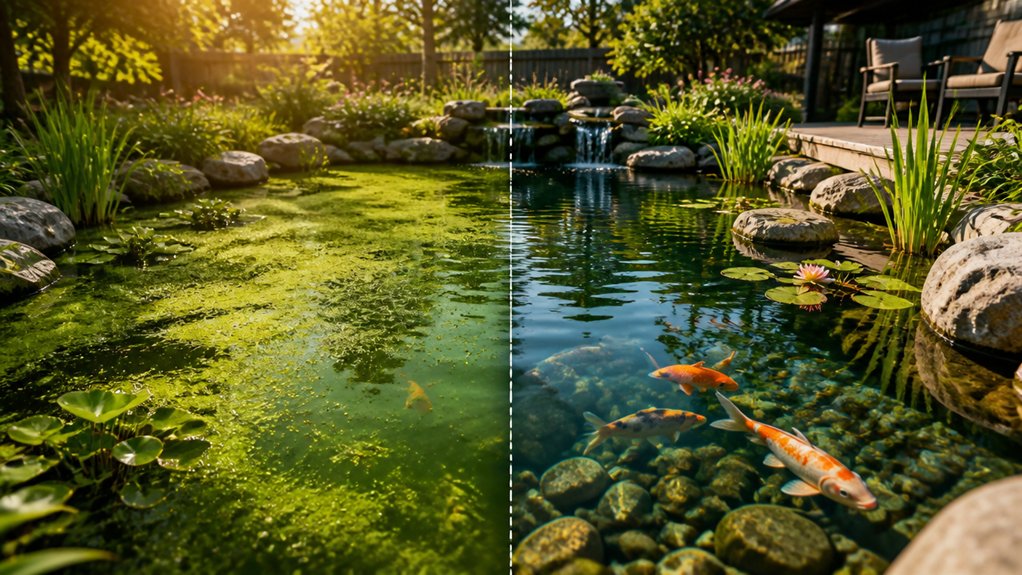
You’ll need to evaluate five key factors before selecting your pond algae treatment: verify that your chosen product won’t harm your fish and plants, identify whether you’re dealing with green water algae, string algae, or blanket weed, measure your pond’s volume to apply the correct dosage, check how often the treatment requires reapplication throughout summer, and confirm your pond has adequate aeration and water circulation to support the treatment’s effectiveness. Each factor directly affects whether the algae treatment will succeed in your specific pond environment. Start by testing a small area or consulting your pond’s documentation to determine which combination of these factors applies to your situation.
Fish and Plant Safety
What’s the most critical factor when selecting a pond algae treatment? Checking whether it’s safe for your specific fish and plants. Many algaecides carry label warnings against use with certain species like koi, goldfish, and trout. Some formulations also harm invertebrates such as snails and shrimp. Before purchasing, read the label restrictions carefully to identify compatible wildlife. Next, verify your pond type matches the product’s requirements—some treatments aren’t suitable for ponds without synthetic liners or very young ponds. During treatment, increase aeration to maintain oxygen levels, since dying algae depletes dissolved oxygen and stresses fish. Finally, confirm the product works with your plants. Following these steps prevents harm to your aquatic ecosystem and ensures effective, safe algae control.
Algae Type Coverage
How do you know which algae treatment will actually work on the algae you’re dealing with? First, identify your algae type: green water consists of single-celled algae suspended in your pond, while filamentous algae appears as hair-like strings or blanketweed mats on surfaces. Next, check the product label to confirm it targets your specific algae form. Some treatments address multiple types—green water, string algae, blanketweed, and planktonic species—while others focus on just one category. Then, determine your pond’s gallons and depth, since coverage guidance depends on these measurements. Finally, consider whether you need immediate bloom control or ongoing prevention after initial clearance. Match your algae type, pond size, and treatment goal before purchasing to ensure effectiveness throughout summer.
Pond Size and Dosage
Selecting the right algaecide dosage starts with calculating your pond’s total water volume in gallons, since most products specify a maximum coverage capacity—commonly ranging from 8,000 to 9,600 gallons or higher. Match your pond’s volume to the product’s stated coverage to determine how many bottles or gallons you’ll need for initial treatment. For ponds exceeding single-dose capacity, plan multiple applications spaced three days apart until algae control is achieved. Consider your pond’s depth and surface area, as these factors affect how evenly the treatment distributes. After initial control, switch to maintenance dosing—typically weekly or every few days—to sustain clarity. Always refer to the product label for your specific pond dimensions and aeration level to ensure proper concentration throughout the water column.
Treatment Frequency Requirements
Once you’ve determined the correct initial dosage for your pond’s volume, you’ll need to establish a dosing schedule that matches your algae control goals and pond conditions. Most treatments require re-dosing every three days during the starter phase until algae are controlled. After you’ve eliminated the initial bloom, switch to a maintenance schedule of every one to two weeks. Your specific frequency depends on the product instructions and how quickly algae returns to your pond. Check your water regularly to monitor algae growth. If algae reappears faster than expected, increase dosing frequency. If it remains controlled, maintain the current schedule. Running aeration during treatment protects fish and improves effectiveness, so activate aerators before applying algaecide.
Aeration and Water Conditions
Why does aeration matter when you’re treating pond algae? Aeration increases oxygen levels, which directly supports fish welfare and prevents dangerous oxygen depletion during treatment. Active aeration also improves how well algaecide products work by increasing water movement and contact with algae.
You should run aerators continuously throughout treatment and maintain them afterward to stabilize treated water. Well-aerated conditions strengthen beneficial bacteria colonies, which break down organic matter and sludge alongside your algaecide application.
Temperature and water movement also affect treatment performance. Algaecides work better in warmer water with actively growing algae. Check product labels for specific temperature requirements before dosing. If your pond’s water is cold or stagnant, consider waiting for warmer conditions or improving aeration first to maximize results.
Final Thoughts
To control pond algae effectively, you’ll combine chemical treatments with maintenance practices. Start by aerating vigorously, then apply EPA-registered products like API Pond Algaefix or MICROBE-LIFT Algaway 5.4 every three days until clear. Add beneficial bacteria to support clarity. Remove debris mechanically and maintain consistent filtration. Switch to weekly or biweekly doses for prevention. Monitor regularly for returning blooms and adjust your approach accordingly.
Related Posts


About The Author

LED Guru
An experienced veteran when it comes to growing indoors, hydroponics, and organics. LED Guru shares a massive amount of knowledge about LED growing and how to do it best.